How to Bleed a Radiator: A Simple Step-by-Step Guide
If your radiators are warm at the bottom but cold at the top, you have trapped air in your heating system. Bleeding your radiators releases that air so hot water can fill the whole radiator again — warming your room faster and cutting your energy bills. It's one of the easiest DIY heating jobs you can do, and in this guide our heating engineers walk you through exactly how to bleed a radiator safely.
What Does Bleeding a Radiator Do?
Over time, air naturally collects inside your radiators, rising to the top and blocking hot water from reaching it. Bleeding a radiator means opening a small valve at the top to let the trapped air escape. Once the air is out, water rushes in to fill the radiator, so the whole panel gets hot again.
Signs Your Radiators Need Bleeding
- Cold at the top, warm at the bottom — the classic sign of trapped air.
- Gurgling or bubbling sounds when the heating is on.
- Some radiators take much longer to heat up than others.
- Your boiler pressure keeps rising and falling after bleeding.
What You'll Need
- A radiator bleed key (a cheap tool from any DIY shop — about £2).
- A dry cloth or towel to catch drips.
- A small bowl or jug placed under the valve.
How to Bleed a Radiator: Step by Step
Step 1: Turn Off Your Heating
Always turn your heating off and let the radiators cool fully. Bleeding a hot radiator risks scalding, and a hot system can push more air in while you're working.
Step 2: Check Which Radiators Need Bleeding
Feel each radiator. If it's cold at the top and warm at the bottom, it needs bleeding. Start with the radiator furthest from the boiler — this is where air usually collects first.
Step 3: Prepare for Drips
Place a small bowl or cloth directly under the bleed valve (the small square peg at the top corner of the radiator) to catch any water that escapes.
Step 4: Insert the Key
Push the radiator key onto the bleed valve. Hold your cloth underneath with your other hand.
Step 5: Slowly Turn the Valve Anti-Clockwise
Turn the key about half a turn anti-clockwise. You should hear a hissing sound — that's the trapped air escaping. Don't unscrew it fully or it'll come out.
Step 6: Wait for the Hissing to Stop
Let the air escape until the hissing stops. As soon as water starts to trickle out, the air has gone.
Step 7: Close the Valve Quickly
Turn the key clockwise to close the valve as soon as water appears. Don't overtighten — a firm nip is enough. Wipe away any drips.
Step 8: Check Your Boiler Pressure
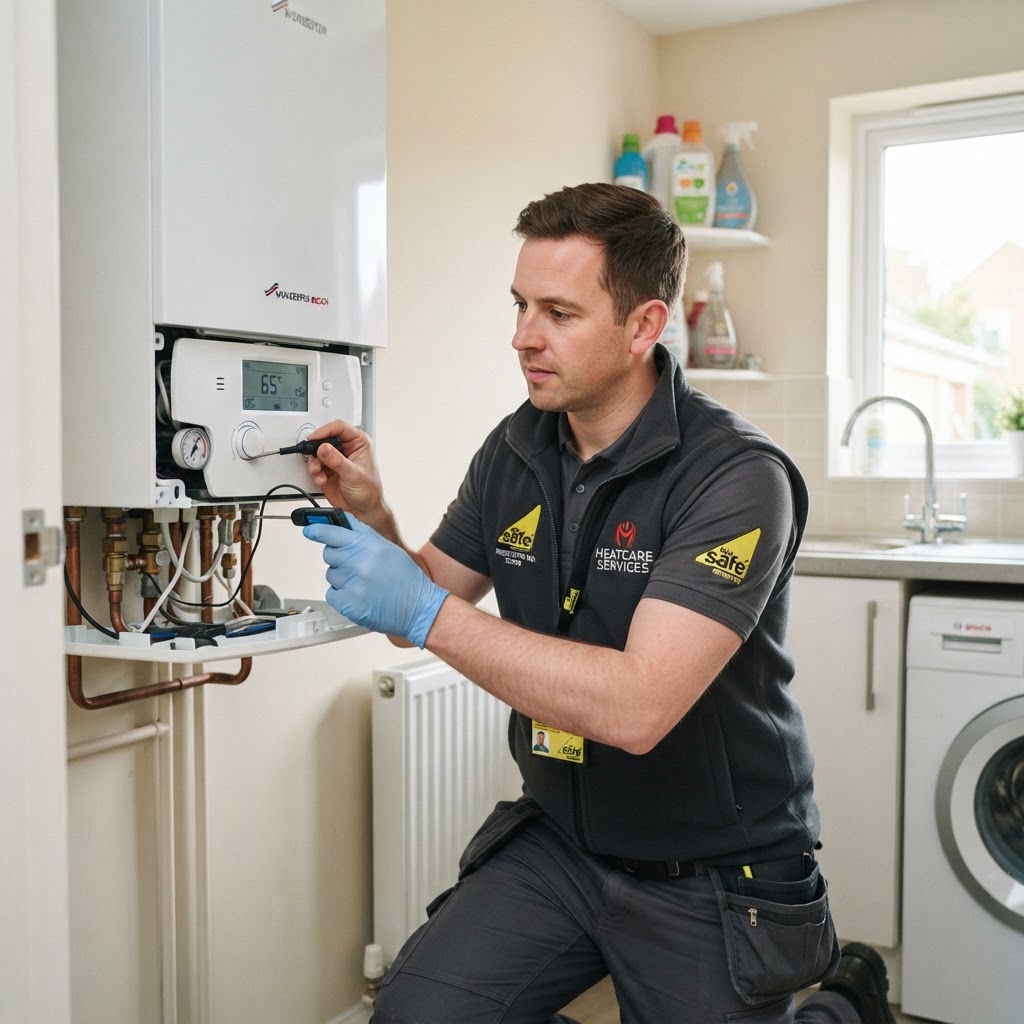
Bleeding radiators releases water from the system, which can lower your boiler pressure. Check the pressure gauge on your boiler — it should sit between 1 and 1.5 bar when cold. If it's dropped below 1 bar, top it up using the filling loop. Learn more about boiler pressure.
Step 9: Repeat for Other Radiators
Work your way through every radiator in the house, starting from the one furthest from the boiler and finishing with the one nearest.
Step 10: Turn the Heating Back On
Once all radiators are bled and the pressure is correct, turn the heating back on and check that every radiator now heats up fully and evenly.
How Often Should You Bleed Your Radiators?
Most homes only need to bleed radiators once a year, usually at the start of autumn before the heating comes back on. If you find yourself bleeding them every few weeks, you likely have air getting into the system — often a sign of:
- A leak somewhere in the pipework.
- Corrosion inside the radiators creating gases.
- A problem with the boiler or pump.
If air keeps returning, it's worth booking a boiler service or a powerflush to investigate the root cause.
Common Mistakes to Avoid
- Bleeding a hot radiator — you'll get a spray of scalding water.
- Unscrewing the valve too far — it'll come out completely and flood.
- Overtightening when closing — you can damage the valve seat.
- Forgetting to check boiler pressure afterwards — low pressure will shut the boiler down.
- Not using a cloth — rusty water can stain carpets and walls.
Still Got Cold Radiators After Bleeding?
If you've bled your radiators and they're still not heating properly, the problem is likely:
- Sludge in the system — cold at the bottom means a powerflush is needed.
- A faulty thermostatic radiator valve (TRV) — stuck closed.
- An unbalanced system — radiators nearest the boiler hog all the heat. Balancing involves adjusting the lockshield valves and is best done by a heating engineer.
- A failing pump — not pushing water to the furthest radiators.
Bleeding Radiators vs Powerflushing
Bleeding removes air. A powerflush removes sludge and rust. If your radiators are cold at the bottom or have cold patches in the middle, bleeding won't help — you need a powerflush to clear the internal build-up and restore full heat.
Get Help From Your Local Heating Engineers
Bleeding a radiator is a simple, satisfying DIY job that takes minutes. But if you're dealing with cold radiators, recurring air, or a system that's not heating evenly, our heating engineers across Dartford, Bexley, Gravesend and Kent are here to help.
Call Warren Plumbing & Heating on 07793 134077 or get in touch online — we'll have your heating running warm and even in no time.