New Gas Tightness Testing Rules 2026: What the Updated Standard Means for Your Home
In March 2026, the Institution of Gas Engineers & Managers (IGEM) published IGEM/UP/1B Edition 4 — the most significant update to gas tightness testing and purging procedures in over a decade. It replaces the long-standing Edition 3 and changes how every Gas Safe registered engineer in the UK proves a gas installation is safe and leak-free. If you're a homeowner or landlord in Dartford, Bexley, Gravesend, Swanley or anywhere across Kent, here's what the new rules mean for you — and why they're good news for your safety.
What Is Tightness Testing?
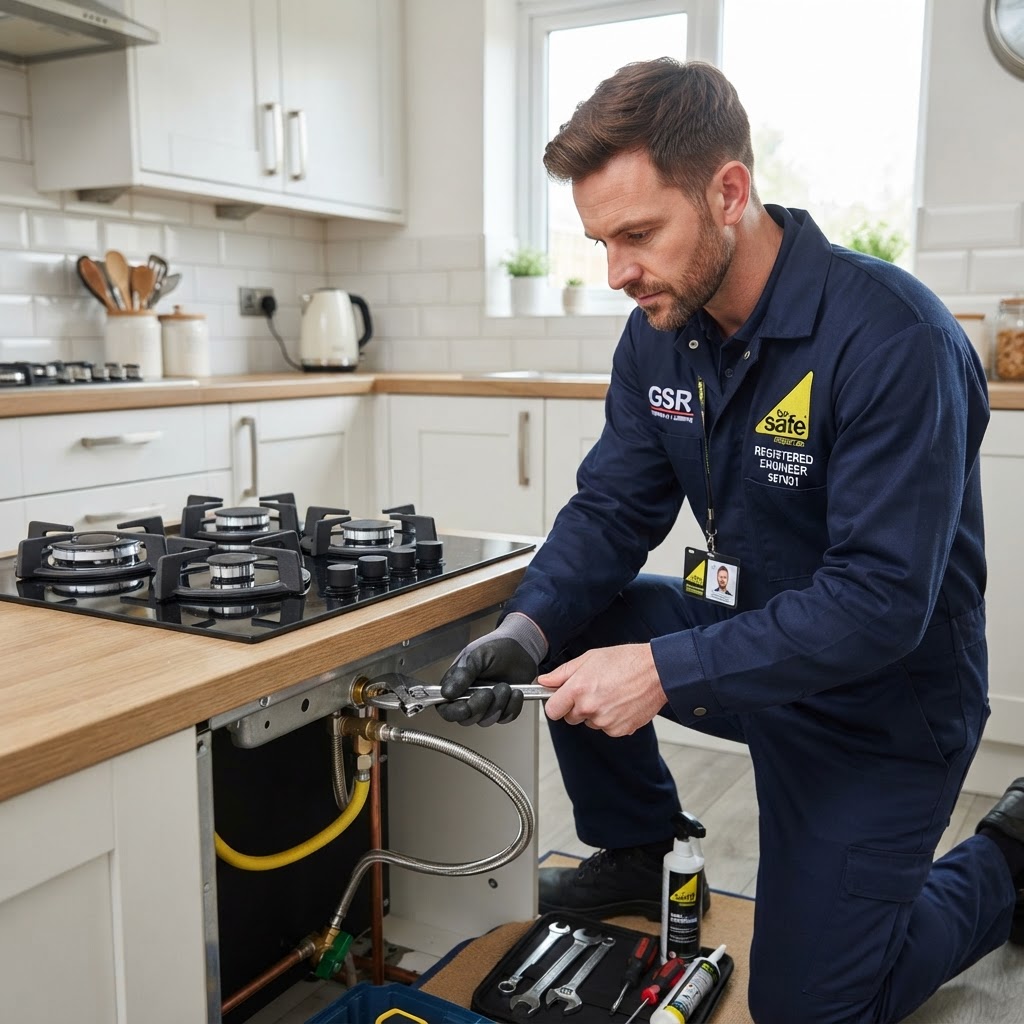
A tightness test (often called a gas leak test) is the procedure a Gas Safe engineer carries out to prove that your gas pipework and appliances are completely gas-tight — no leaks, no escapes. It's a core part of:
- A new boiler installation.
- An annual boiler service.
- A landlord gas safety certificate (CP12).
- Any work involving new or altered gas pipework.
The test involves pressurising the gas system and watching a manometer (a pressure gauge) for any drop in pressure. If the pressure holds, the installation is gas-tight. If it drops, there's a leak that must be found and fixed before the system is used.
What's Changed in IGEM/UP/1B Edition 4?
The previous standard (Edition 3) had been in place for many years. Edition 4, published in March 2026, introduces several important changes:
1. Permissible Pressure Drops Now Based on Installation Volume (Not Meter Size)
Under the old rules, the amount of pressure drop an engineer could "allow" was determined by the size of your gas meter (for example, a U6 or G4 meter). Edition 4 scraps this approach. Permissible pressure limits are now determined by the Installation Volume (IV) — the actual volume of gas the pipework and appliances hold.
This brings Natural Gas testing in line with the more rigorous standards already used for LPG, and it means tests are now far more precise to the specific installation in your home.
2. Stricter Pipework Integrity — Zero Tolerance for Leaks
One of the most important safety improvements: the new standard ensures that a "permissible" leak can never be hidden inside your building's pipework.
If an engineer detects a pressure drop that falls within the allowed limits for the whole system, they must now isolate all appliances and re-test the pipework on its own. For the pipework-only test, there is zero tolerance — no perceptible movement on the gauge is allowed. If the needle moves at all, the pipework has a leak and the test is an immediate fail.
In plain terms: your gas pipes must now be proven 100% gas-tight, every time.
3. A Single, Universal Purging Formula
Purging — the process of safely removing air from gas pipework before commissioning — has been simplified. Instead of different calculations for different pipe diameters and meter types, a single formula now applies to every installation:
Purge Volume (PV) = 1.5 × Installation Volume (IV)
This makes purging more consistent, more accurate and safer across the board.
4. New Permissible Limit Tables
The new standard introduces revised tables that set maximum allowable pressure drops based on fuel type and installation volume:
| Fuel Type | Installation Volume | Max Permissible Pressure Drop | | --- | --- | --- | | Natural Gas | Up to 0.005 m³ | 8 mbar | | Natural Gas | Over 0.015 m³ up to 0.035 m³ | 1 mbar | | LPG | Up to 0.0025 m³ | 2 mbar | | LPG | Over 0.01 m³ | No perceptible movement | | Pipework only / new appliances | Any | No permissible pressure loss |
The key takeaway for homeowners: when only pipework (or brand-new appliances) is being tested, no pressure loss at all is permitted. Your installation must be completely sound.
The Transition Period: When Do the New Rules Apply?
IGEM/UP/1B Edition 4 was published in March 2026, with a 6-month transition period running until 30 September 2026. During this window:
- Both Edition 3 and Edition 4 are technically valid.
- The Gas Safe Register has confirmed they will not penalise engineers using the older procedures during the transition.
From 1 October 2026, full compliance with Edition 4 becomes mandatory. Every Gas Safe registered engineer — including our team at Warren Plumbing & Heating — must follow the new, stricter procedures.
How Does This Impact You as a Homeowner or Landlord?
Safer Installations and Repairs
The biggest impact is positive: your gas installation is tested to a higher, more precise standard. The new rules make it harder for a small leak to go unnoticed, so when our engineers sign off a new boiler or a gas safety certificate, you can be even more confident your home is safe.
Slightly Longer Testing Times
Because the new procedure may require calculating the installation volume and, where needed, isolating appliances to re-test the pipework, a tightness test can take a little longer than under the old standard. You might notice your engineer spending a few extra minutes on the test — that's the new, more thorough process at work.
More Thorough Gas Safety Certificates (CP12)
If you're a landlord, your annual gas safety certificate will now be carried out to the updated standard. The pipework in your rental property will be proven completely gas-tight — an even stronger reassurance for you and your tenants, and full compliance with the law.
No Change to the Cost of a Standard Service
While the test is more detailed, the principles — and the equipment — remain the same. For most straightforward domestic installations the change doesn't add cost; it simply makes the test more accurate and your home safer.
Older Installations May Need Remedial Work
If you have an older gas installation, the stricter pipework-only test is more likely to pick up a small, pre-existing leak that may have passed under the old rules. If that happens, our engineers will explain clearly what's needed to put it right — and carry out the repair to the new standard.
Why It Matters: Gas Safety Is Never Optional
Gas leaks are dangerous. Even a small escape can build up over time, and undetected leaks are a leading cause of carbon monoxide poisoning and gas explosions. The whole purpose of IGEM/UP/1B Edition 4 is to close the gaps that the old meter-based system left — so that every gas installation, in every home, is proven to the same high standard of safety.
For you, that means:
- Greater peace of mind after any gas work in your home.
- A more rigorous annual service and CP12.
- Confidence that your engineer is following the very latest safety standards.
Are Our Engineers Compliant?
Yes. At Warren Plumbing & Heating, all our engineers are Gas Safe registered and fully trained on the new IGEM/UP/1B Edition 4 standard. We follow the updated tightness testing and purging procedures on every job — whether it's a new boiler installation, a service, a repair, or a landlord gas safety certificate — so your home or rental property is always tested to the latest, safest standard.
Frequently Asked Questions
Do the new rules make my gas bill or service more expensive?
No. The test is more precise, but for most domestic jobs it doesn't add cost. It simply ensures your installation is checked more thoroughly.
Will my boiler still pass the test?
If your boiler and pipework are in good condition, yes — the new standard simply proves what was always the aim: that the system is gas-tight. If an older installation has a small leak, the stricter test may pick it up so it can be fixed before it becomes dangerous.
I'm a landlord — does my CP12 change?
The certificate itself is the same legal document, but it's now carried out under the tighter Edition 4 rules. Your tenants' safety is even better protected, and you remain fully compliant with gas safety regulations.
When do the new rules become mandatory?
From 1 October 2026, all Gas Safe engineers must use IGEM/UP/1B Edition 4. We've already adopted it.
Book Gas-Safe Work to the Latest Standard
Whether you need a new boiler installation, an annual service, a landlord gas safety certificate, or a gas repair, our Gas Safe registered engineers across Dartford and Kent carry out every job to the latest IGEM/UP/1B Edition 4 standard — keeping your home safe, compliant and warm.
Call Warren Plumbing & Heating on 07793 134077 or get a free quote online — we're here to help.